
Gendered History
Largely neglected in early scholarship, gender has since then emerged as vital analytic lens for studying the Holocaust. Analyses that center on gender have in particularly shed light on the experiences of women, probing how societal norms and gendered expectations shaped their responses to persecution as well as illuminating the specific forms of discriminating they experienced. Conversely, aspects such as masculinity are now considered vital for comprehending not only the mindset of the male perpetrators but also how Jewish men responded to persecution.
Translated version
here
Locations: Jasenovac
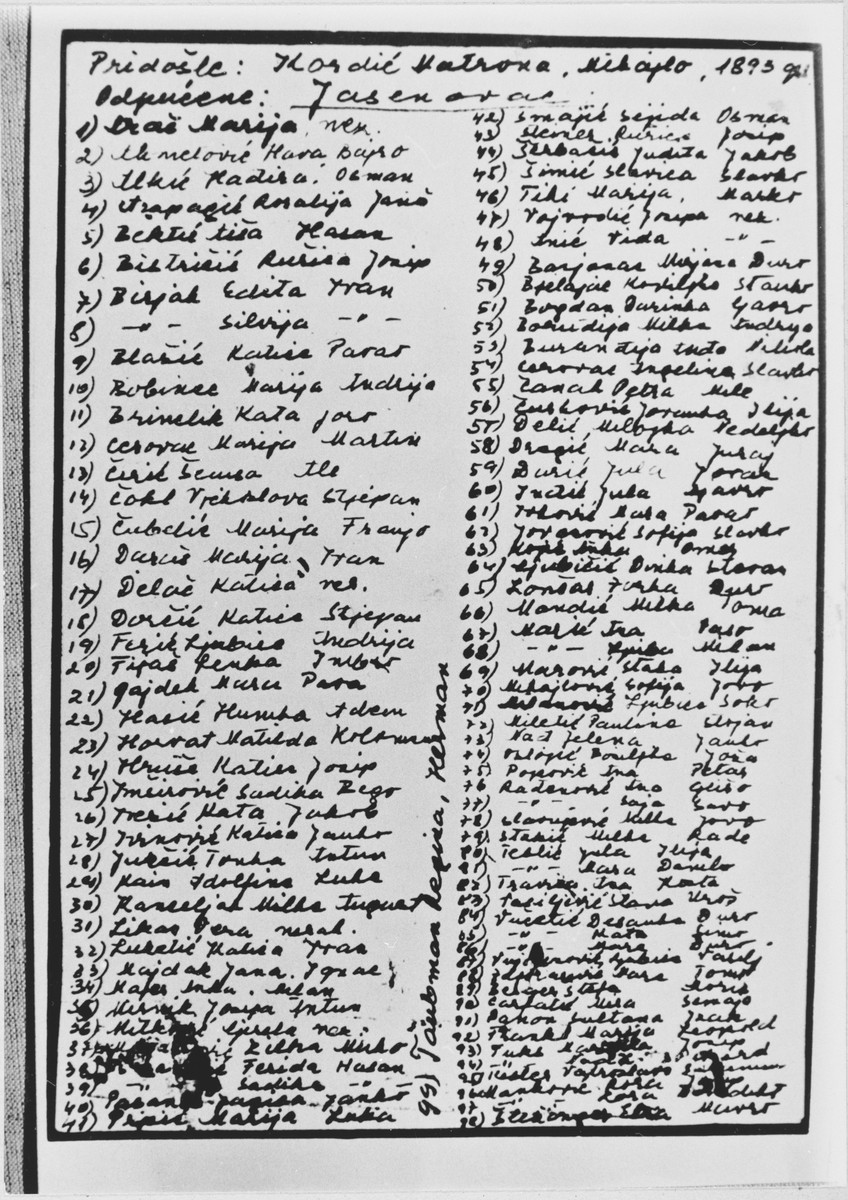
Excerpt from the Postwar Testimony of Maja Buždon, Commander of the Women’s Section of the Stara Gradiška Camp
Translated version
here
Locations: Jasenovac
Extract from Report About Intimate Relations Among Female Inmates in the Stara Gradiška Camp
Translated version
here
Locations: Jasenovac
Petition by “Aryan” Women in Osijek Protesting the Persecution of Their Jewish Husbands
Translated version
here
Locations: Osijek